Why Traditional Roofing Methods Still Matter for Homes in Bearsden
A Look at Time-Tested Roofing Practices
I have spent the better part of two decades working on roofs across central Scotland, and one thing I have learned is that newer is not always better. When a homeowner in Bearsden calls me about a leaky roof or a sagging gutter, the conversation often turns to whether they should go with modern synthetic materials or stick with something older and more proven. The truth is, traditional roofing methods have kept Scottish homes dry through centuries of wind and rain. They are not just about nostalgia. They are about performance, durability, and working with the local climate rather than against it.
Bearsden sits in a part of Scotland that gets a lot of weather. The damp, the frost, the sudden gales off the Firth of Clyde all put serious stress on any roof. I have seen modern composite slates fail after ten or twelve years because they could not handle the freeze-thaw cycles. Meanwhile, a properly laid natural slate roof from a century ago is still going strong. That kind of track record is hard to argue with. It is why I still reach for traditional roofing methods on most of the repair and replacement jobs I do around here.
The Materials That Built Scotland
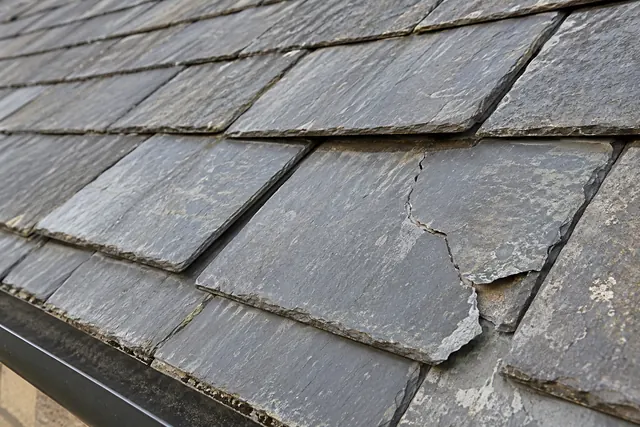
When people hear the phrase traditional roofing methods, they often picture thatched roofs or heavy stone tiles. And yes, those are part of the story. But the tradition I work with most in Bearsden is slate roofing. Scotland has some of the finest natural slate in the world, and for good reason. The stone is dense, low in porosity, and splits into thin, strong sheets that can last a hundred years or more. I have pulled up old slates from a house in Bearsden that were still perfectly sound after eighty years of exposure. You cannot say that about most modern substitutes.
Clay tiles are another material with deep roots here. They were brought over from the continent centuries ago and adapted to Scottish weather. They work well on steeper pitches and give a roof a warm, textured look that many homeowners love. But they require a skilled hand to fit properly. The same goes for wooden shingles, which are less common in Scotland but still appear on some older buildings and outbuildings. They need good ventilation underneath to prevent rot, and they reward careful installation with decades of service.
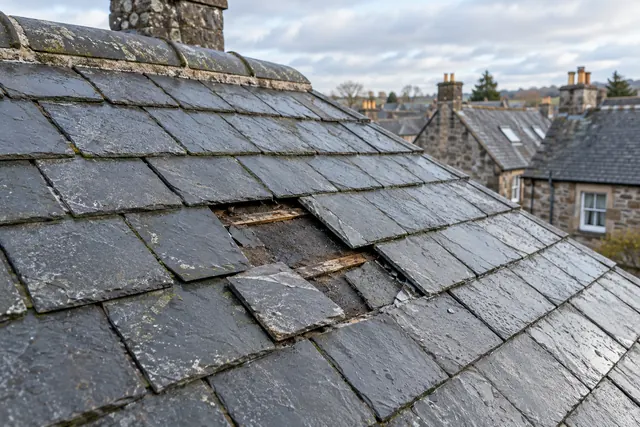
Stone tiles are the heaviest option, and they are mostly found on historic buildings or listed properties. They demand a strong roof structure and a lot of labour to install. But when they are done right, they are nearly indestructible. I have worked on a few heritage roofing projects where we had to match existing stone tiles from a local quarry, and the patience it takes is immense. That is the thing about traditional methods. They are not quick. They are not cheap. But they are honest.
How Traditional Methods Handle Scotland's Weather
The biggest challenge for any roof in this part of the world is water. Rain blows in from every direction, and if your roof has a weak point, the water will find it. That is where details like lead flashings become critical. Lead is a material that has been used for centuries to seal joints and valleys, and it is still the best option for flashing around chimneys, vents, and roof valleys. Modern tapes and sealants fail after a few years, but a properly dressed lead flashing can last fifty years or more. I always recommend lead for any roof repair that involves a chimney or a wall junction.
Under the tiles or slates, the structure matters just as much. Traditional roofs in Scotland were built with sarking boards, which are thick timber planks nailed directly to the rafters. On top of those, roof battens are laid to hold the slates or tiles. Sarking boards give the roof rigidity and provide a solid base for fixing the battens. They also help with roof insulation, because you can fit insulation between the rafters above the sarking without it sagging. Modern roofs often skip the sarking in favour of breathable membranes, but I have seen too many membranes tear or degrade in strong winds. Sarking boards are heavier and take longer to install, but they are far more robust.
Roof ventilation is another area where traditional methods have a lot to teach us. Old roofs were designed to breathe. The gaps in the sarking, the way the tiles were hung with a slight lift, the open ridge details all allowed air to circulate and keep the timbers dry. When you seal a roof too tight with modern vapour barriers and spray foam, you can trap moisture inside the structure. That leads to rot and mould. I always try to maintain some natural airflow in the roof void, especially when I am doing roof repairs on older houses in Bearsden.
Lime Mortar and the Art of Pointing
One traditional method that often gets overlooked is the use of lime mortar for bedding and pointing ridge tiles, hips, and valleys. Modern cement mortars are too hard and too impermeable. They trap water inside the roof structure, which then freezes and cracks the tiles or the masonry underneath. Lime mortar, on the other hand, is softer and more porous. It lets moisture evaporate out slowly, which protects the surrounding materials. I have re-bedded ridge tiles on a house in Bearsden that had been pointed with cement twenty years ago, and the ridge tiles were starting to split. We took it all off, cleaned the tiles, and re-bedded them in lime mortar. That was three years ago, and the ridge is still tight and sound.
Lime mortar also works well with natural stone walls and chimneys, which are common in older homes around here. If you are having roof repairs done on a pre-1900 house, I would strongly recommend asking your roofing contractors whether they plan to use lime mortar for any masonry work. It is a small detail, but it makes a big difference in the long run.
Guttering Systems and Water Management
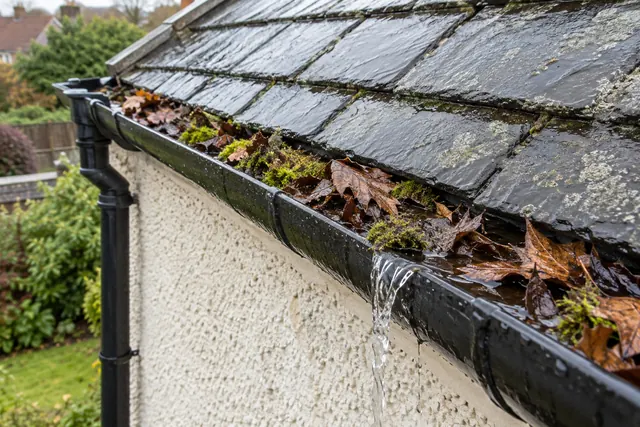
No roof is complete without a good guttering system. Traditional methods here mean cast iron gutters and downpipes, which have been used in Scotland for over a hundred years. Cast iron is heavy, durable, and handles the volume of water that comes off a slate roof in a heavy downpour. Modern plastic gutters are lighter and cheaper, but they can warp in the sun, crack in frost, and they do not handle snow load well. I have replaced dozens of plastic gutters that sagged or split after a few years. Cast iron, painted and maintained properly, will outlast the plastic by decades. It also looks right on older houses. There is something about the way a cast iron gutter sits against a stone wall that a plastic one just cannot match.
That said, cast iron does require maintenance. The joints need to be kept sealed, the paint needs to be in good condition to prevent rust, and the brackets need to be sound. But that is true of any guttering system. The difference is that cast iron repays that care with a lifespan that can exceed fifty years. When I am advising local roofers on a job, I always suggest cast iron for heritage properties and for any house where the owner plans to stay put for the long haul.
Why Local Knowledge Matters
One of the reasons I keep coming back to traditional roofing methods is that they were developed by people who lived and worked in this exact climate. The roofers who built the houses in Bearsden a hundred years ago did not have the internet or product catalogues full of synthetic membranes. They had local materials, local weather, and a deep understanding of what worked. That knowledge has been passed down through generations. It is still relevant today.
I am not saying we should never use modern materials. There are good synthetic underlays and high-performance insulation products that have their place. But the core of any durable roof is the same as it ever was: good materials, good design, and skilled installation. If you are looking for roof repairs or a new roof on a house in Bearsden, I would encourage you to talk to roofing contractors who respect the old ways. Ask them about natural slate, about sarking boards, about lead flashings and lime mortar. The answers will tell you a lot about how they work.
At the end of the day, your roof is the single most important protective layer on your home. It keeps the rain out, the heat in, and the structure sound. Choosing traditional roofing methods for your repair or replacement is not about being old-fashioned. It is about choosing materials and techniques that have proven themselves over decades and centuries. That is a choice any homeowner in Bearsden can feel good about.